PRACTICAL GUIDE TO DESIGNING BRAIN-FRIENDLY TRAINING &
FACILITATING IT WITH CONFIDENCE
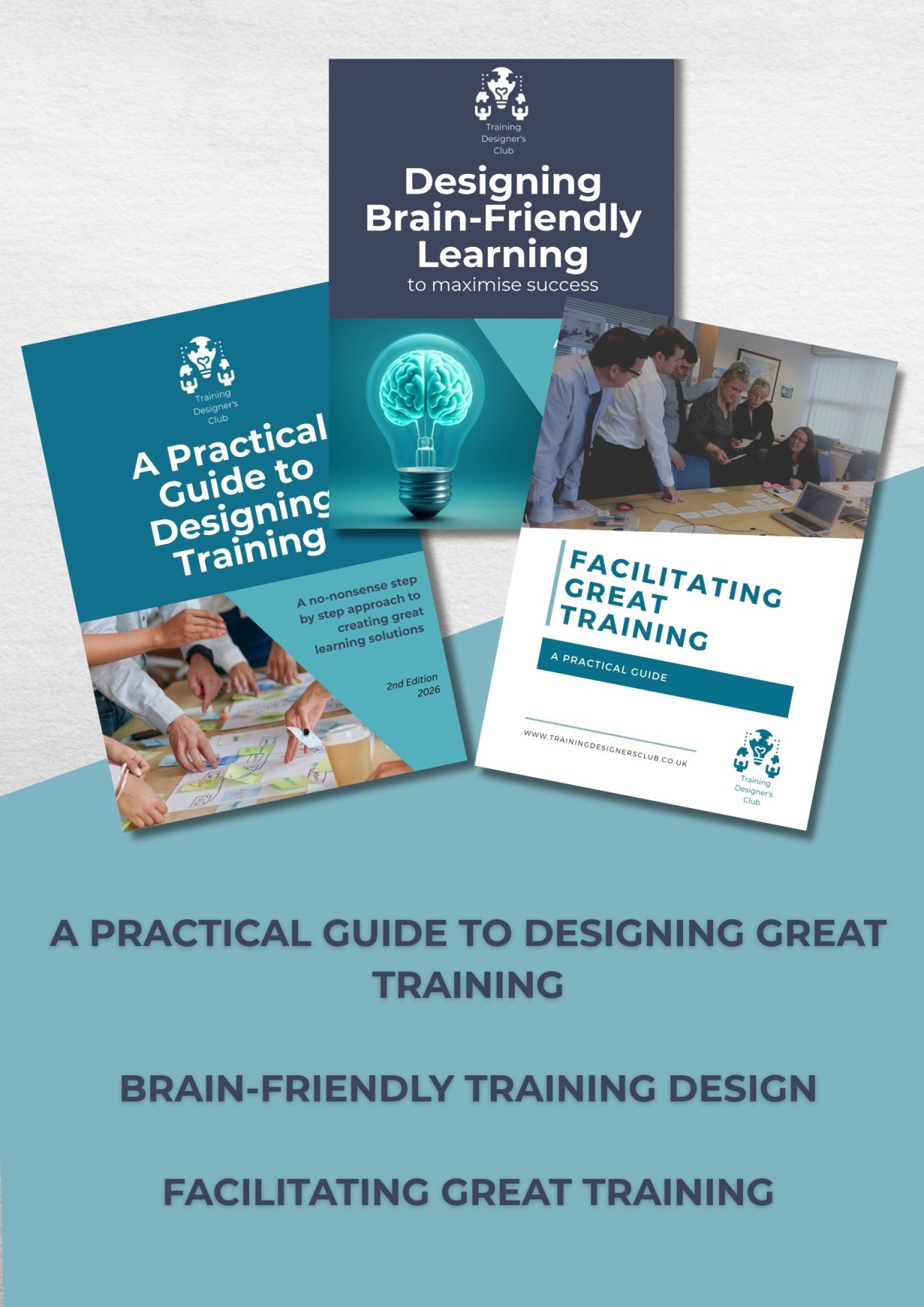
EBOOKS
A PRACTICAL GUIDE TO DESIGNING & FACILITATING GREAT TRAINING - BACKED BY LEARNING SCIENCE
You don't need another textbook telling you about how things shuld work in theory. You're a busy practitioner who wants to get things done, and get it right first time.
That's why these e-books are written from a PRACTICAL perspective, although you will learn a little about some of the theory that supports good practice. The aim is to provide you with straightforward guidance that you can dip in and out of, and use as necessary.
They follow logical, step-by-step methods, include checklists and suggest what good looks like at each stage.
The Guides Cover:
A Practical Guide to Designing Great Training
A practical process from initial brief to finished programme
A step-by-step guide to creating well-structured training that meets learner and business needs.
- Understanding needs and agreeing objectives
- Choosing what to include and leave out
- Structuring the learning journey
- Selecting methods and creating materials
- Designing for accessibility and using AI appropriately
- Supporting transfer and evaluating results
- Reviewing, piloting and launching your programme
Brain-Friendly Training Design
Understand what helps people learn, remember and apply
An accessible guide to turning learning science into practical, purposeful design decisions.
- Motivation and meaningful learning
- Attention and focus
- Metacognition: helping learners think about their thinking
- Memory, retrieval and retention
- Transfer, habits and behaviour change
- Emotional safety and appropriate challenge
- Collaboration and social learning
Facilitating Great Training
Bring your training to life with confidence and flexibility
A practical handbook for preparing and running engaging learning events whilst responding to the needs of your group.
- Preparing yourself and the learning environment
- Making an impact with voice and body language
- Using visual aids effectively
- Managing discussions and participation
- Running and debriefing activities
- Adapting to group needs and handling challenges
- Closing sessions and supporting application